
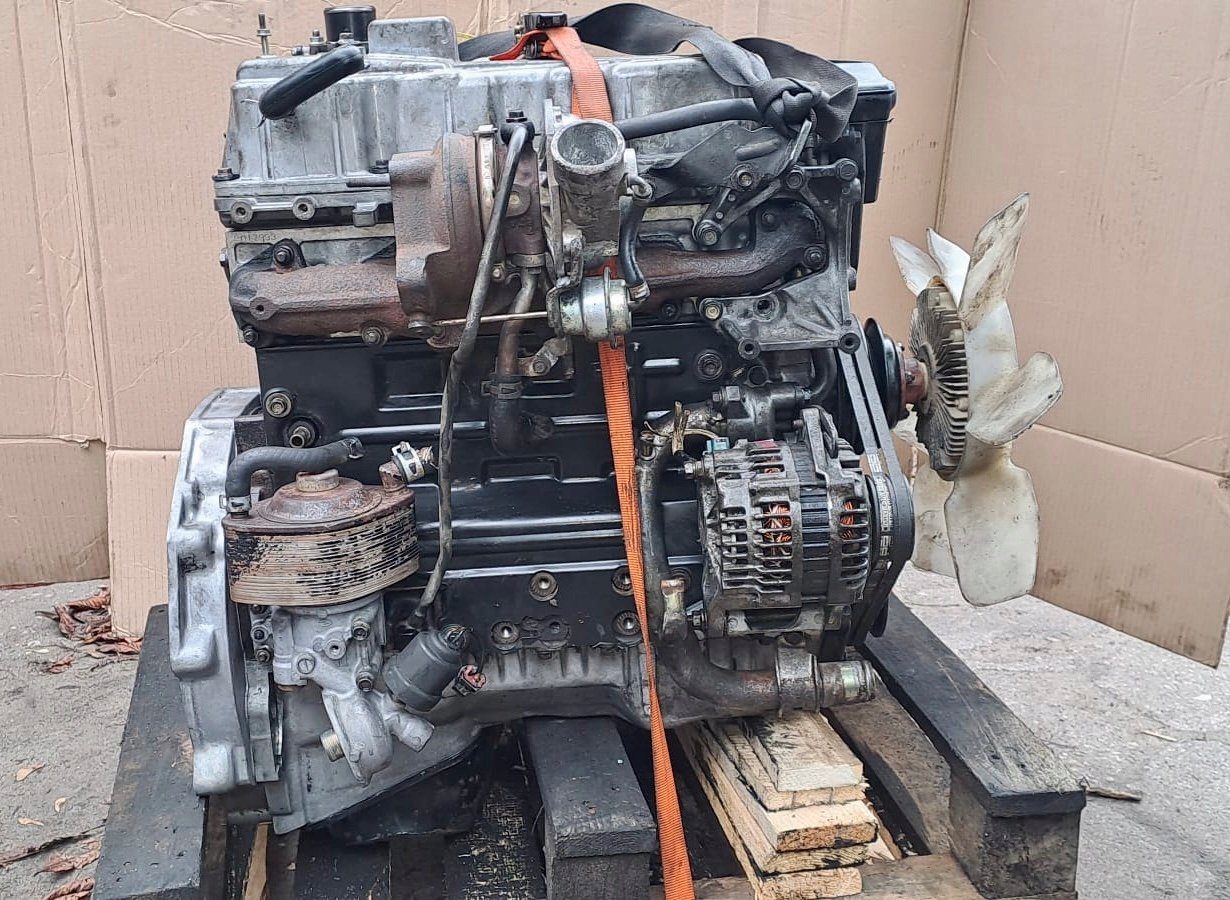
4JX1 engine for sale
Table of Contents
- Introduction to the 4JX1 Engine
- 4JX1 Engine Technical Specifications
- Engine Design and Engineering
- Performance and Fuel Efficiency
- Compatible Vehicles and Applications
- Why Buy a 4JX1 Replacement Engine?
- Used, Tested, Reconditioned and Complete Engine Options
- What to Check Before Purchasing
- Installation Considerations
- Maintenance Recommendations
- Common 4JX1 Considerations
- Global Shipping and Export
- Why Choose Engines For Sales?
- 70 Powerful SEO Keywords
- Frequently Asked Questions
- Product Conclusion
. Introduction to the 4JX1 Engine
The Isuzu 4JX1 is a well-known 3.0-liter diesel engine from Isuzu’s J-series engine family. It was developed to provide a combination of strong torque, responsive turbocharged performance and improved fuel efficiency for SUV applications. Isuzu’s historical documentation identifies the 4JX1-TC as a 2,999 cc inline four-cylinder diesel with DOHC, 16 valves, intercooling and electronically controlled common-rail high-pressure fuel injection.
The engine is particularly associated with vehicles such as the Isuzu Bighorn and Trooper. Vehicle specification databases also identify the 4JX1 in 3.0 DTI versions of the Trooper, with common-rail injection, turbocharging, four valves per cylinder and a 95.4 mm bore by 104.9 mm stroke.
If you need a replacement engine because of high mileage, low compression, excessive smoke, overheating, damaged internal components or general engine failure, choosing the correct engine code is essential. Our 4JX1 engine for sale is intended for buyers who need to replace an existing 4JX1 power unit while maintaining the correct engine architecture.

4JX1 Engine Technical Specifications
The following specifications describe the commonly documented 4JX1-TC configuration. Exact specifications can vary according to market, model year, ECU calibration and vehicle application, so customers should always verify the engine code and VIN before ordering.
| Specification | 4JX1-TC Details |
|---|---|
| Engine manufacturer | Isuzu |
| Engine family | J-Series |
| Engine code | 4JX1 / 4JX1-TC |
| Fuel type | Diesel |
| Configuration | Inline 4-cylinder |
| Displacement | 2,999 cc / 3.0L |
| Bore | 95.4 mm |
| Stroke | 104.9 mm |
| Valvetrain | DOHC |
| Valves | 16 valves |
| Aspiration | Turbocharged |
| Intercooler | Yes |
| Fuel system | High-pressure common rail |
| Maximum published power | 118 kW / 160 PS |
| Maximum published torque | 333 Nm |
| Peak power speed | 3,900 rpm |
| Peak torque speed | 2,000 rpm |
| Typical application | SUV and 4×4 applications |
| Engine orientation | Front longitudinal in documented Trooper applications |
Isuzu’s own historical specifications confirm the 2,999 cc displacement, 95.4 × 104.9 mm bore and stroke, 118 kW output and 333 Nm torque figure for the 4JX1-TC.
A quality 4JX1 engine for sale should therefore be identified by its engine code rather than by appearance alone. Similar-looking Isuzu diesel engines may have different mounting arrangements, fuel systems, sensors, ECU requirements and transmission interfaces.
Engine Design and Engineering
3.1 3.0-Liter Four-Cylinder Configuration
The 4JX1 has a 2,999 cc displacement and inline four-cylinder arrangement. Its relatively large displacement for a four-cylinder diesel provides useful torque while keeping the engine package more compact than many six-cylinder alternatives.
The 95.4 mm bore and 104.9 mm stroke contribute to the engine’s torque-oriented characteristics. This configuration is particularly useful in SUVs and four-wheel-drive vehicles that require usable pulling power at relatively low engine speeds.
3.2 DOHC 16-Valve Cylinder Head
The 4JX1-TC uses a double overhead camshaft configuration with 16 valves. Four valves per cylinder allow efficient airflow through the cylinder head and support the engine’s turbocharged combustion system.
A properly maintained cylinder head is important for compression, combustion efficiency and stable engine performance. Before installation, buyers should inspect the cylinder head, gasket surfaces, injectors and related components.
3.3 Turbocharger and Intercooler
Turbocharging increases the amount of air available for combustion. The intercooler then helps reduce the temperature of compressed intake air before it enters the engine.
This combination allows the engine to develop useful power from its 3.0-liter displacement while supporting strong acceleration and load-carrying capability.
3.4 Common-Rail Fuel Injection
One of the important features of the 4JX1-TC is its electronically controlled high-pressure common-rail fuel injection system. Isuzu specifically described the engine as using an electronically controlled common-rail high-pressure fuel-injection system.
Because common-rail systems depend on accurate fuel pressure and clean fuel, replacement-engine buyers should pay close attention to the condition of the injectors, fuel pump, fuel lines and filtration system.

Performance and Fuel Efficiency
The 4JX1 was developed to deliver a balance between power and fuel economy. Isuzu reported 118 kW, equivalent to 160 PS, and 333 Nm of torque for the 4JX1-TC. Maximum torque was developed at approximately 2,000 rpm, providing useful pulling performance for SUV and four-wheel-drive applications.
The engine’s turbocharger helps maintain strong airflow as engine load increases. This is particularly valuable when the vehicle is carrying passengers, travelling on inclines, operating on rough roads or towing appropriate loads.
Fuel consumption depends heavily on the vehicle, transmission, driving style, road conditions, tire size, vehicle weight and maintenance condition. Therefore, customers should not rely on a single fuel-consumption figure when evaluating a replacement engine.
For buyers seeking an 4JX1 engine for sale, the main advantage is not simply peak horsepower. The engine’s useful torque characteristics, four-cylinder layout, turbocharging and common-rail injection make it a suitable replacement candidate for compatible vehicles.
Compatible Vehicles and Applications
The 4JX1 is strongly associated with Isuzu SUV applications. Isuzu’s historical documentation specifically identifies the engine as being installed in the Bighorn.
Documented applications include:
- Isuzu Bighorn
- Isuzu Trooper
- Isuzu Trooper 3.0 DTI
- Related market-specific 3.0 diesel SUV configurations
- Certain Isuzu 4×4 applications using the 4JX1-TC
European Trooper specifications list the 4JX1 engine in 3.0 DTI models with a five-speed manual transmission, while automatic versions were also available in some applications.
However, compatibility should never be determined only from the vehicle name. Different production years and markets can use different wiring, ECU, transmission, mounting, emissions and accessory configurations.
Before purchasing an 4JX1 engine for sale, provide your vehicle year, model, VIN, existing engine code, transmission type and photographs where possible. This information helps determine whether the replacement unit is appropriate.
Why Buy a 4JX1 Replacement Engine?
Replacing an entire engine can be more practical than rebuilding a severely damaged original unit. A replacement engine may reduce repair time and help return a vehicle to service more quickly.
A replacement engine can be considered when the original engine has:
- Severe internal mechanical damage
- Low compression
- Excessive oil consumption
- Persistent overheating
- Damaged pistons or cylinders
- Crankshaft problems
- Severe cylinder-head damage
- Excessive wear from high mileage
- Major lubrication-system failure
- Repair costs that exceed the value of rebuilding
A correctly matched 4JX1 engine for sale can provide a practical path toward restoring an older Isuzu SUV while retaining the original engine family.
The key is to purchase based on verified engine identification rather than simply choosing the cheapest available unit.
Used, Tested, Reconditioned and Complete Engine Options
Depending on availability, replacement engines can be supplied in different conditions.
7.1 Used Engine
A used engine can be an economical solution for customers who want to restore a vehicle without the cost of a fully rebuilt engine. Used engines should be carefully inspected for oil contamination, compression, abnormal noise, coolant contamination, leaks and general mechanical condition.
7.2 Tested Engine
A tested engine provides additional confidence because important mechanical characteristics can be checked before shipment. Depending on the unit and available testing equipment, inspection may include visual examination, compression testing, leak inspection, oil-condition assessment and engine-code verification.
7.3 Reconditioned Engine
A reconditioned engine may involve inspection and replacement of worn components. The exact work performed depends on the engine’s condition and the supplier’s rebuilding specification.
7.4 Complete Engine
A complete engine may include additional accessories such as the turbocharger, intake components, alternator, starter, fuel-system components, sensors or other attached parts. However, contents vary by engine, so buyers should confirm exactly what is included before payment.
When ordering a 4JX1 engine for sale, always ask whether the listing represents a long block, bare engine, complete engine or dressed engine.
What to Check Before Purchasing
Buying an engine online requires careful verification. Before placing an order, provide:
- Vehicle make and model.
- Production year.
- VIN/chassis number.
- Existing engine code.
- Transmission type.
- Vehicle market or country.
- Photographs of the existing engine.
- Required engine condition.
- Required accessories.
- Destination country and delivery location.
The VIN is particularly useful because a vehicle may have been produced in several markets with different specifications.
Installation Considerations
Installation should be performed by a qualified diesel technician familiar with Isuzu engines and common-rail fuel systems.
Before starting a replacement engine, the mechanic should inspect:
- Engine mounts
- Transmission compatibility
- Flywheel and clutch
- Cooling system
- Radiator
- Hoses
- Fuel lines
- Fuel filters
- Electrical harness
- ECU
- Sensors
- Turbocharger plumbing
- Exhaust system
- Air intake
- Battery and starter system
The technician should also confirm that the replacement engine’s sensors and electronic components are compatible with the vehicle’s existing ECU.
Do not assume that every accessory from one 4JX1 configuration will automatically transfer to another. Differences between markets and model years can make certain components incompatible.
After installation, the engine should be filled with the appropriate fluids, the lubrication system primed and the fuel system properly prepared before normal operation.
Maintenance Recommendations
Regular maintenance is essential to achieving reliable service from any diesel engine.
Engine Oil
Use the lubricant specification recommended for your particular vehicle and operating environment. Oil level and condition should be checked regularly.
Fuel Filtration
Clean diesel fuel is particularly important for common-rail systems. Replace fuel filters according to the vehicle manufacturer’s maintenance schedule and use reputable diesel fuel.
Cooling System
Check coolant level, radiator condition, hoses and thermostat operation. An overheating engine can suffer severe cylinder-head and internal-component damage.
Air Filtration
A clean air filter helps the turbocharger and engine receive adequate airflow while preventing dust and debris from entering the intake system.
Turbocharger Inspection
Check for abnormal turbocharger noise, excessive shaft movement, oil leakage or unusual smoke. Turbocharger problems should be addressed promptly.
Electrical System
Inspect wiring, sensors, battery voltage and charging-system performance. Electronic diesel engines depend on accurate signals from multiple sensors.
A properly maintained 4JX1 engine for sale can be a valuable replacement for an aging or damaged original unit, but longevity ultimately depends on installation quality, fuel quality, lubrication and routine maintenance.
Common 4JX1 Considerations
Because the 4JX1 is an older electronically controlled diesel design, buyers should pay particular attention to the condition of its fuel-injection system and electronic controls.
Common-rail components operate under high pressure and require clean fuel. Injector condition, fuel pressure, electrical connections and correct ECU communication should therefore be checked during diagnosis.
Some owners and technicians also report concerns involving injector sealing and fuel contamination. These reports reinforce the importance of professional inspection rather than assuming that every used engine is ready for immediate installation.
The right approach is to evaluate the individual engine being purchased. Mileage, maintenance history, compression, oil condition and component condition are more useful than relying solely on general opinions about an engine family.
When buying a 4JX1 engine for sale, ask for the engine code, condition, photographs, available test information and included components before completing the transaction.
Global Shipping and Export
Engines For Sales supplies engines internationally. Its website states that its export service supports customers across Africa, Europe, Asia, Australia, North America, South America, the Middle East and the Caribbean.
Engines are generally prepared for transportation using suitable protective packaging and crating procedures. International customers should provide complete delivery information so shipping arrangements can be evaluated correctly.
For an international order, customers should confirm:
- Destination country
- Delivery city
- Port or door delivery requirement
- Engine condition
- Crate dimensions and weight
- Shipping terms
- Required documentation
- Customs requirements
- Import regulations
- Delivery timeframe
International engine buyers should also check their country’s import requirements before ordering.
Why Choose Engines For Sales?
Engines For Sales focuses on supplying replacement engines to customers seeking dependable powertrain solutions. According to its website, its quality process may include visual inspection, compression testing where applicable, leak inspection, oil-condition checks, engine-code verification, compatibility verification and mechanical assessment.
Customers looking for an 4JX1 engine for sale can benefit from discussing their exact vehicle requirements with the sales team before ordering.
Important advantages include:
Engine Identification
The engine code and vehicle details can be reviewed before purchase to help reduce compatibility mistakes.
International Supply
Engines can be supplied to customers in different international markets.
Quality Inspection
Available engines can be evaluated according to their condition and available testing procedures.
Technical Assistance
Customers can provide VIN information, engine codes and vehicle details when seeking assistance with engine identification.
Shipping Support
The company works with international customers to arrange transportation for engines and other powertrain products.
Frequently Asked Questions – FAQ
What is the Isuzu 4JX1 engine?
The 4JX1 is a 2,999 cc inline four-cylinder turbocharged diesel engine. The 4JX1-TC uses DOHC, 16 valves, intercooling and electronically controlled high-pressure common-rail fuel injection.
How much power does the 4JX1 produce?
Isuzu’s published 4JX1-TC specification lists maximum power of 118 kW, or 160 PS, at 3,900 rpm and maximum torque of 333 Nm at 2,000 rpm.
What is the displacement of the 4JX1?
The engine has a displacement of 2,999 cc, commonly described as a 3.0-liter diesel engine.
Is the 4JX1 turbocharged?
Yes. The 4JX1-TC is an intercooled turbocharged diesel engine.
Does the 4JX1 use common-rail injection?
Yes. Isuzu identifies the 4JX1-TC as using an electronically controlled high-pressure common-rail fuel-injection system.
Which vehicles use the 4JX1?
The engine was used in applications including the Isuzu Bighorn and Isuzu Trooper 3.0 DTI. Specific applications depend on market and model year.
Is the 4JX1 suitable for an Isuzu Trooper?
The 4JX1 was fitted to certain Isuzu Trooper 3.0 DTI models, making it a potential replacement where the engine code and other specifications match. Always verify the VIN and existing engine before ordering.
Can I buy a complete 4JX1 engine?
Availability and included accessories depend on the individual unit. Buyers should confirm whether the engine is supplied as a long block, complete assembly or dressed engine before purchase.
How do I confirm compatibility?
Provide your VIN, vehicle model, year, existing engine code, transmission type and photographs of your existing engine. These details help determine the correct replacement configuration.
Can you ship the engine internationally?
Engines For Sales states that it supplies engines internationally across several global regions, including Africa, Europe, Asia, Australia, North America, South America, the Middle East and the Caribbean.
Is the 4JX1 the same as the 4JJ1?
No. The 4JX1 and 4JJ1 are different Isuzu engine codes. Although both are 3.0-liter four-cylinder diesel engines from Isuzu’s J-series lineage, their specifications, electronics and applications differ. Buyers should verify the exact engine code before purchasing.
What should I check on a used engine?
Check the engine code, compression where available, oil condition, coolant condition, external leaks, turbocharger condition, injectors, fuel system, wiring, sensors and general mechanical condition.
Product Conclusion
The Isuzu 4JX1 is a capable 3.0-liter turbocharged diesel engine that combines a four-cylinder configuration, DOHC 16-valve cylinder head, intercooling and electronically controlled high-pressure common-rail injection. Isuzu’s own documentation confirms its 2,999 cc displacement, 118 kW maximum output and 333 Nm maximum torque for the 4JX1-TC configuration.
For owners of compatible Isuzu SUVs and 4×4 vehicles, replacing a failed engine can be an effective way to restore vehicle performance without undertaking an extensive rebuild of a severely damaged original unit.
Our 4JX1 engine for sale is aimed at customers searching for a replacement Isuzu diesel engine with verified engine identification and suitable international supply support. The most important step before ordering is to confirm the engine code, VIN, vehicle model, year, transmission and required accessories.
A successful engine replacement depends on more than purchasing the correct engine code. Professional installation, clean fuel, correct lubrication, a healthy cooling system, appropriate electrical connections and proper post-installation testing are all essential for dependable service.
If you are ready to purchase an Isuzu 4JX1 replacement engine, contact Engines For Sales with your vehicle details and VIN so the appropriate engine configuration can be confirmed before shipment.

Reviews
There are no reviews yet.